Avenue Winston Churchill, Hippodrome, Yaoundé

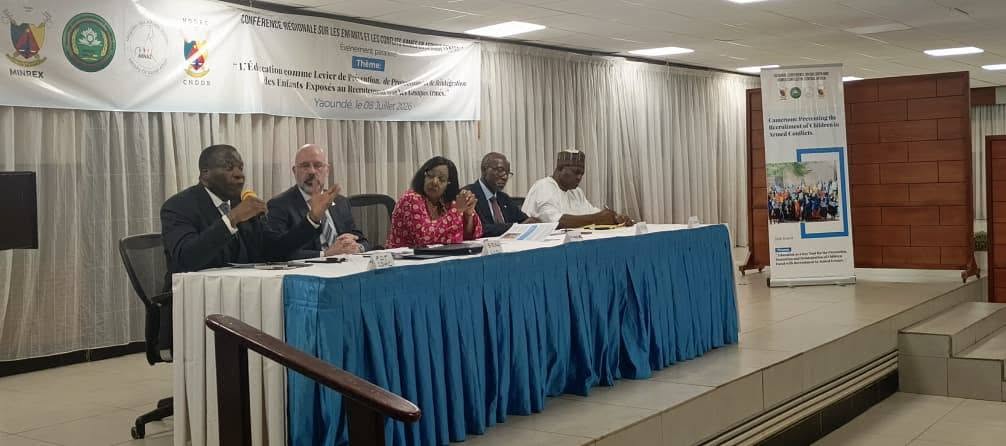
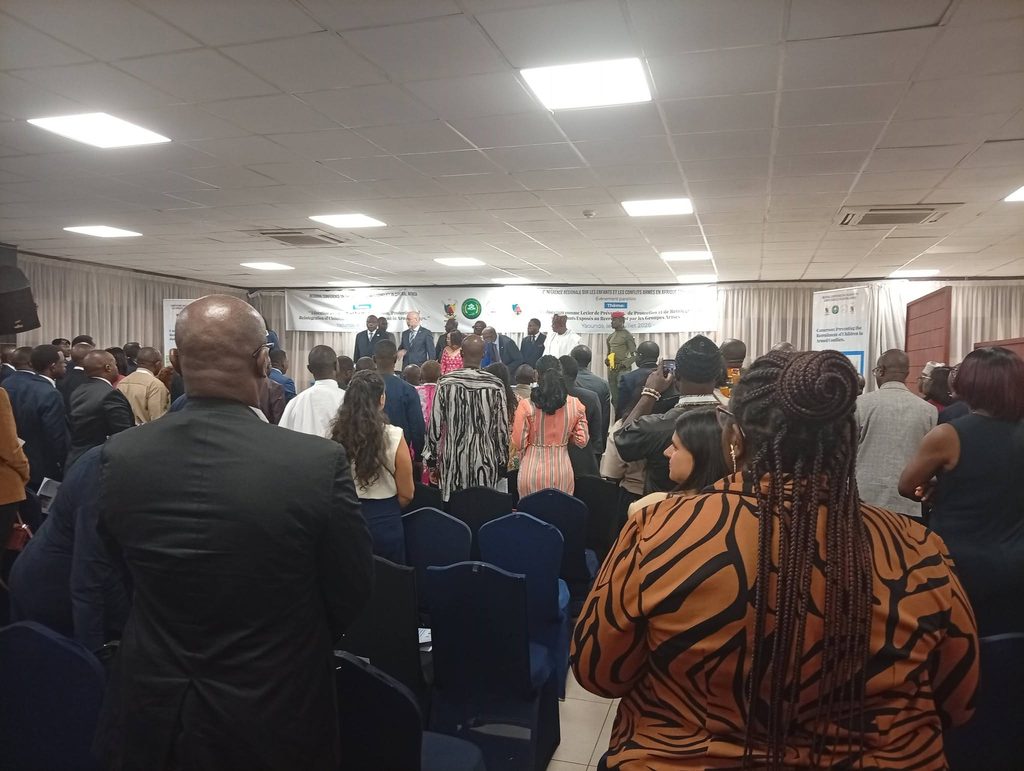
At the invitation of the Minister of External Relations (MINREX), Professor James Mouangue Kobila, Chairperson of the Cameroon Human Rights Commission (CHRC), Chairperson of the Network of African National Human Rights Institutions (NANHRI) participated in the regional conference on children and armed conflict in Central Africa, held on Wednesday, 8 July 2026, at Hotel la Falaise in Yaoundé. The Conference was organised under the theme: “ Education: A Tool for the Prevention, Protection, and Reintegration of Children at Risk of Recruitment by Armed Groups .”
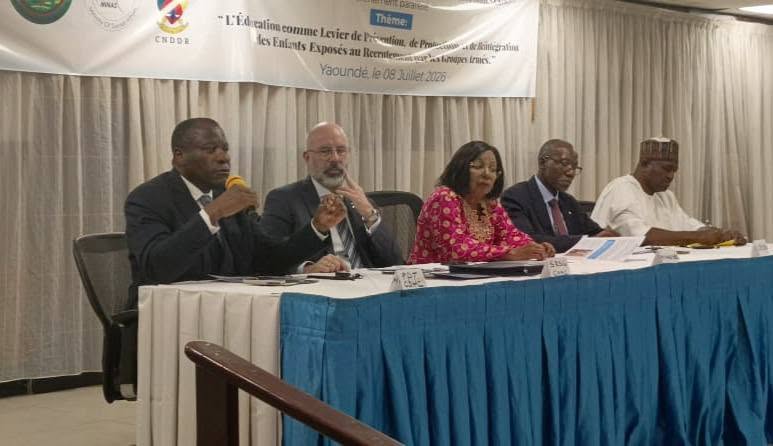
Chaired by Professor Nalova Lyonga, the Minister of Secondary Education, this high-level conference brought together representatives of governments in the Central African region, United Nations agencies, international and regional organisations, technical and financial partners, as well as civil society organizations committed to the protection of children affected by armed conflict.The proceedings featured statements by the Minister of Secondary Education, by Dr Issa Sanogo, the United Nations Resident Coordinator in Cameroon, and Mr Francis Fai Yengo, the National Coordinator of the National Committee for Disarmament, Demobilisation and Reintegration (NCDDR).
The speakers unanimously emphasised that education is a key tool for conflict prevention, the protection of children against recruitment by armed groups, and the sustainable reintegration of children affected by violence. Speakers called for the strengthening of public policies, regional cooperation and the mobilisation of all stakeholders to ensure children’s effective access to safe, inclusive and quality education, including in situation of crisis.
Professor James Mouangue Kobila, who was invited to speak during the panel session, recalled that “ the CHRC has not remained on the side-lines of this struggle. ”He reiterated the CHRC commitment to protecting education from attacks and explained that: ” _following a workshop organised by Save the Children in Dakar, Senegal, on the 6 September 2021 for National Human Rights Institutions (NHRIs), the Commission decided to include the International Day to Protect Education from Attacks among the human rights observances it commemorates annually_ .”
The Chairperson of the CHRC further stated that, since 9 September 2021, the Commission has, on an annual basis, issued a solemn statement reviewing the national situation and making recommendations to public authorities and other stakeholders with a view to strengthening the protection of the right to education.
Illustrating this commitment, he cited four recommendations issued by the Commission, particularly calling on competent authorities to “ _take immediate measures to protect schools and other educational institutions, in accordance with the Safe Schools Statement_ ”, to “ _double their efforts to ensure access to education for all children, including those affected by insecurity_ ”, to “ _take effective measures to guarantee the safety and security of learners and educational personnel throughout the national territory_ ”, and to “ _ensure access to education for all children, particularly in the Far North, North-West and South-West Regions_ .”
These remarks which were met with warm applause from the audience, highlighted the CHRC steadfast commitment to protecting the right to education in situations of armed conflict and provided an opportunity to share the experience developed by the Commission with participants from several Central African countries.
Beyond the discussions held during the conference, significant challenges remain a matter of serious concern. The National Action Plan on Youth, Peace and Security (2025-2026) notes that armed conflicts, insecurity, poverty, and inadequacy of educational infrastructure continue to undermine access to quality education for many children.
Drawing on UNICEF data, the report indicates that more than 1.5 million school-aged children require educational assistance in the North-West, South-West and Far North Regions, as well as in certain localities of the West and Littoral Regions affected by the crisis.
This situation increases the risk of children dropping out of school, being marginalised and being recruited by armed groups, while undermining their future prospects.
#1523